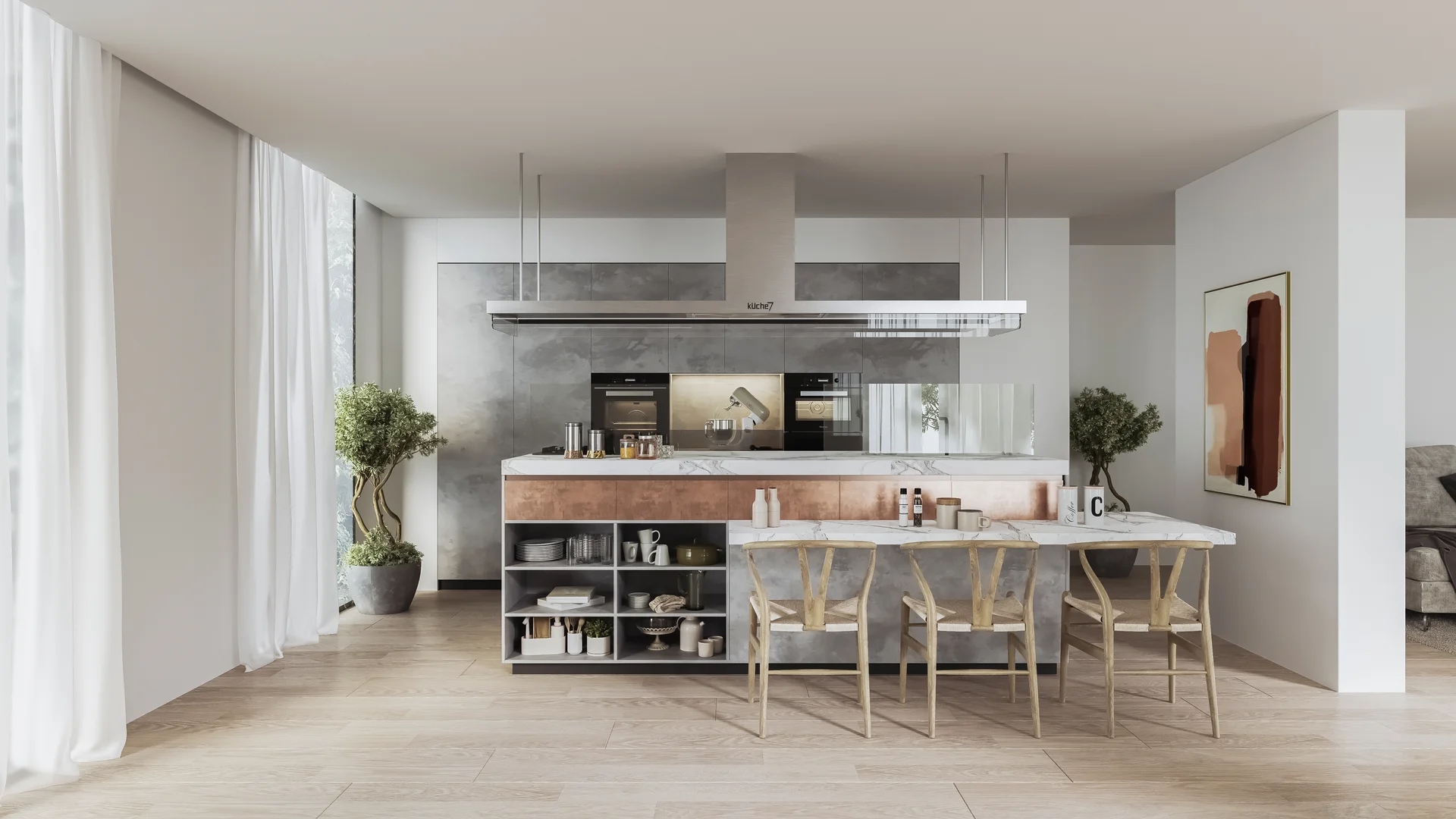
Let’s be honest, breakfast bars are rarely just for breakfast anymore.
They’re where mornings begin with coffee, where laptops quietly open at noon, and where conversations stretch long after dinner. If there’s one kitchen feature where you can relax comfortably, it’s the breakfast bar.
Whether you’re planning a new kitchen or reworking an existing layout, a breakfast bar in the kitchen can change how you use the space without demanding an extra room or a massive footprint.
So let’s talk about what makes a breakfast bar work, how to design it right, and why it might just become your favourite spot at home.
What Exactly Is a Breakfast Bar?
A breakfast bar is a casual seating area, usually attached to a kitchen counter, island, or peninsula. Think of it as the relaxed cousin of the dining table, less formal, more flexible, and always within arm’s reach of food.
Popular search terms you’ll often see:
breakfast bar in kitchen
kitchen breakfast bar design
breakfast counter kitchen
kitchen island with breakfast bar
And yes, they’re popular for a reason.
Why Breakfast Bars Are a Big Win for Modern Kitchens
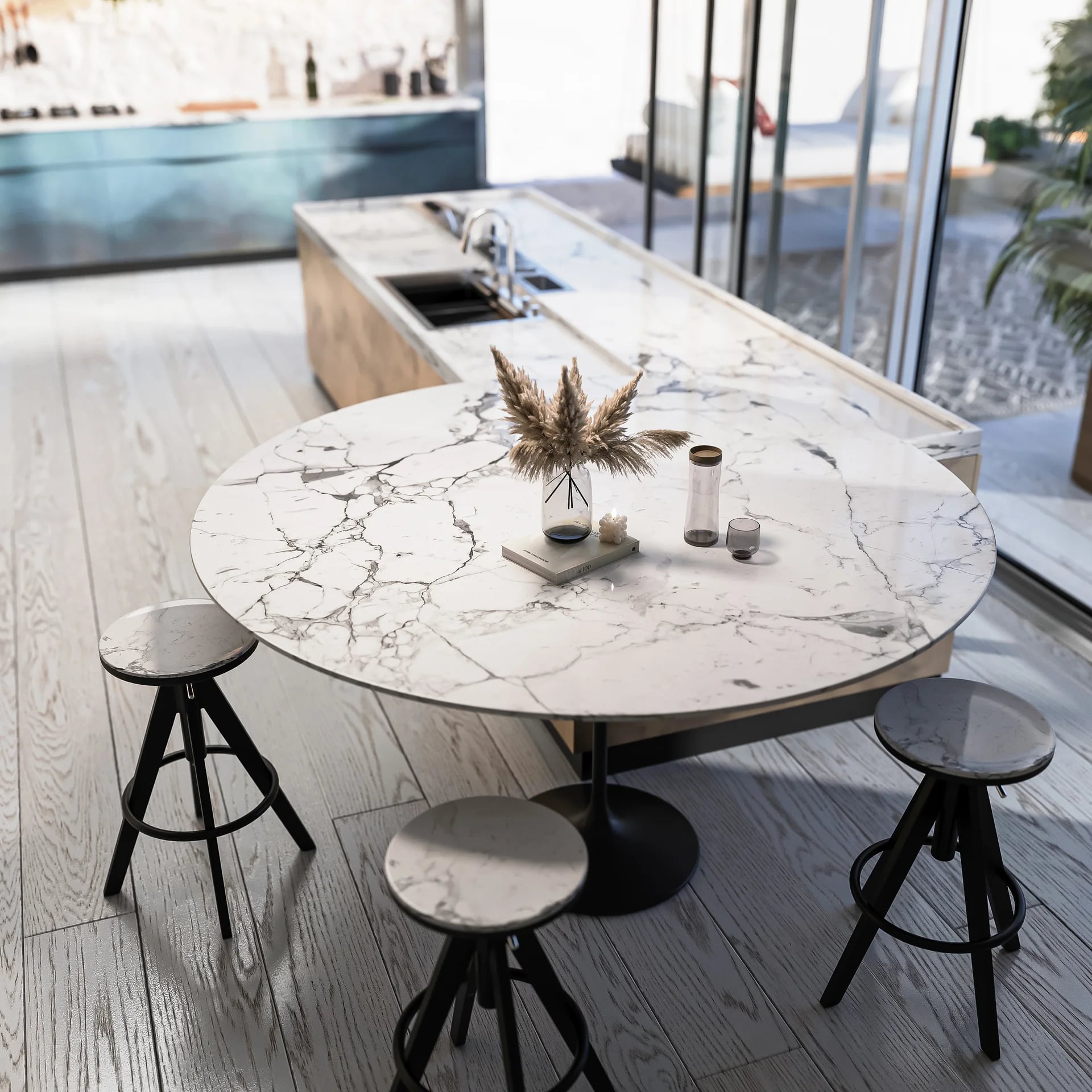
1. They Save Space (and Still Feel Generous)
If you don’t have room for a full dining table, a breakfast bar is the smartest workaround. It fits neatly into open kitchens, compact apartments, and even studio homes, without making things feel cramped.
Tip: A breakfast bar works beautifully as an extension of your kitchen countertop or island, especially in L-shaped and U-shaped kitchens.
2. They Make Kitchens More Social
Cooking while talking? Eating while someone’s plating? A breakfast bar keeps everyone connected.
Instead of guests hovering awkwardly in the doorway, they have a place to sit, sip, and chat while you pretend you’re not stressed about timing the dishes.
This is why breakfast bars are a favourite in open-plan kitchen designs.
3. They’re Surprisingly Multi-Purpose
A breakfast bar isn’t picky about its role:
Morning coffee station
Work-from-home desk
Kids’ homework zone
Late-night snack counter
If a surface can do all that and still look good, it’s earned its place.
Types of Breakfast Bars (Because One Size Never Fits All)
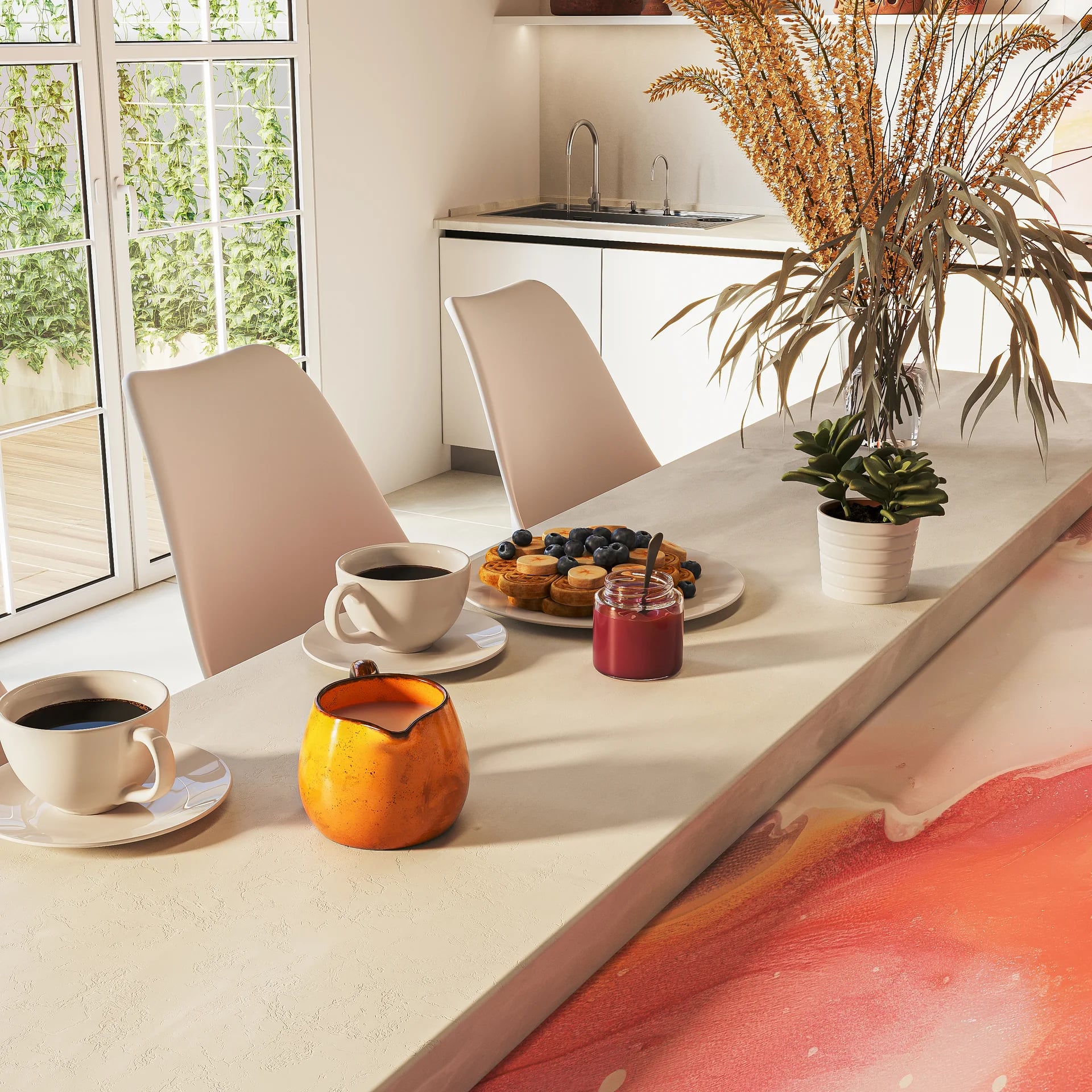
1. Island Breakfast Bar
Probably the most popular choice. A kitchen island with a breakfast bar offers seating on one side and prep space on the other.
Best for: Medium to large kitchens
Design tip: Leave at least 1000–1200 mm clearance around the island for easy movement.
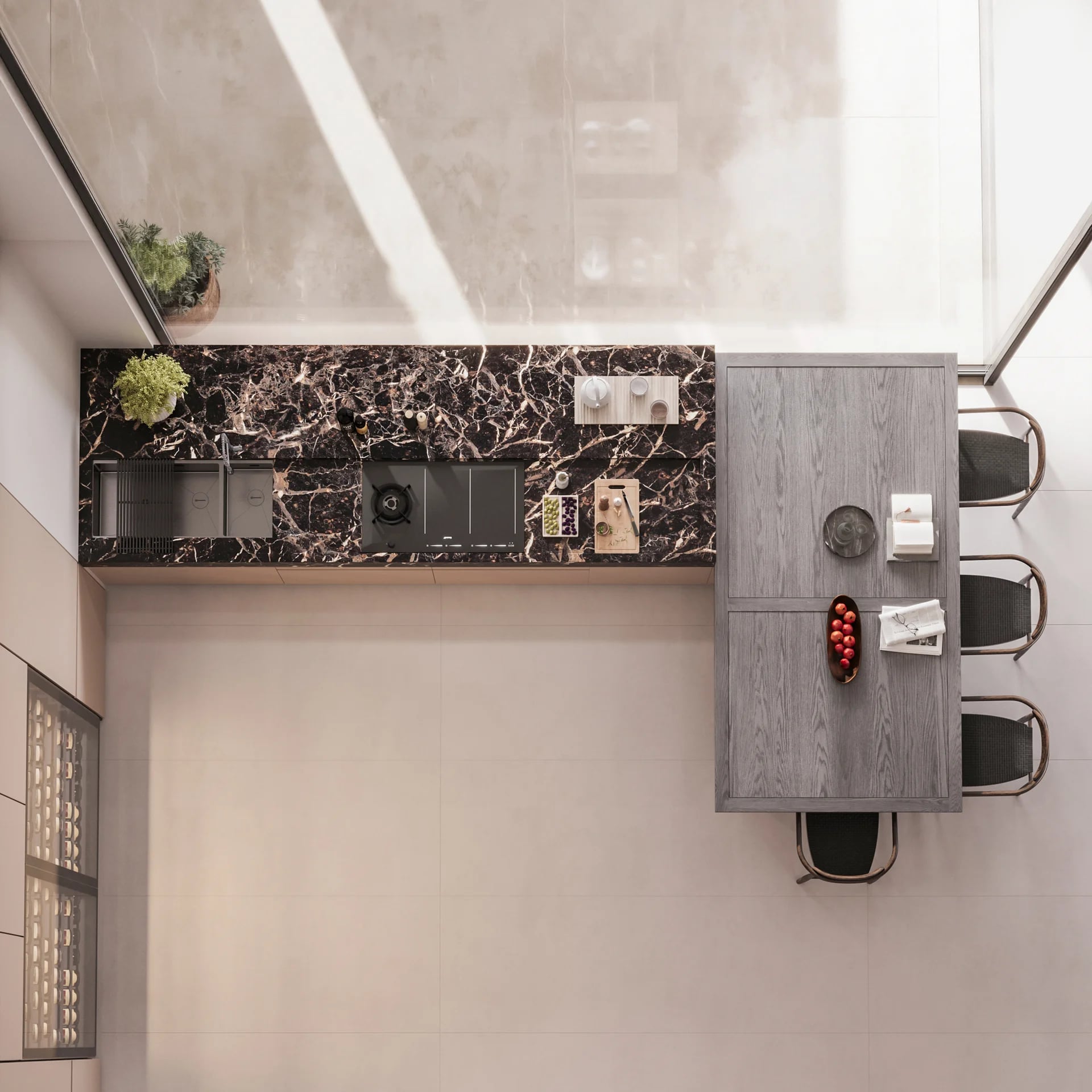
2. Peninsula Breakfast Bar
Attached to the main counter, this breakfast bar extends outward, perfect for compact kitchens.
Best for: Small apartments and narrow layouts
Bonus: Doubles up as a subtle room divider in open spaces.
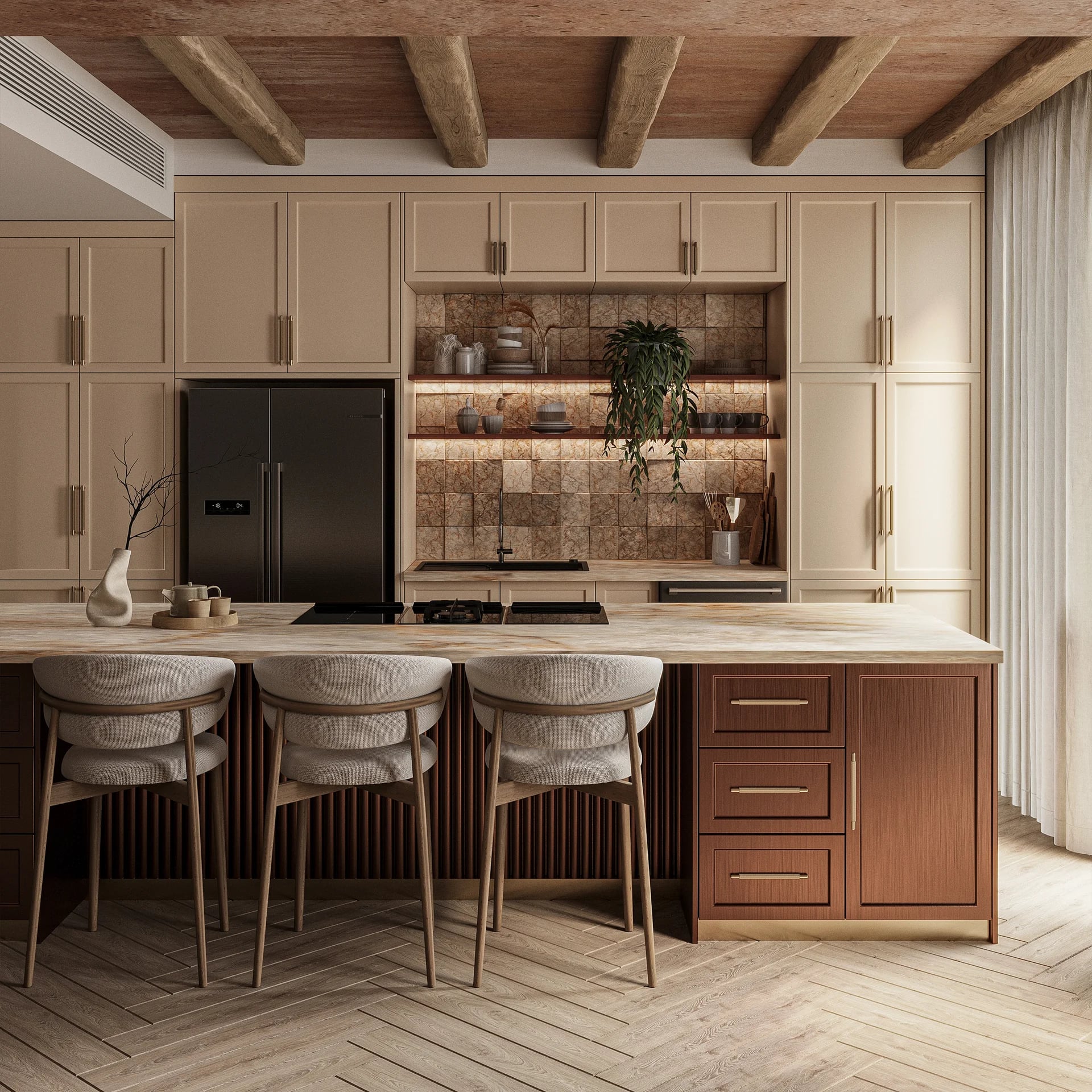
3. Counter-Height Breakfast Bar
Simple, sleek, and practical. This sits at the same height as your kitchen countertop.
Best for: Minimal, modern kitchens
Seating tip: Pair with low stools for everyday comfort.
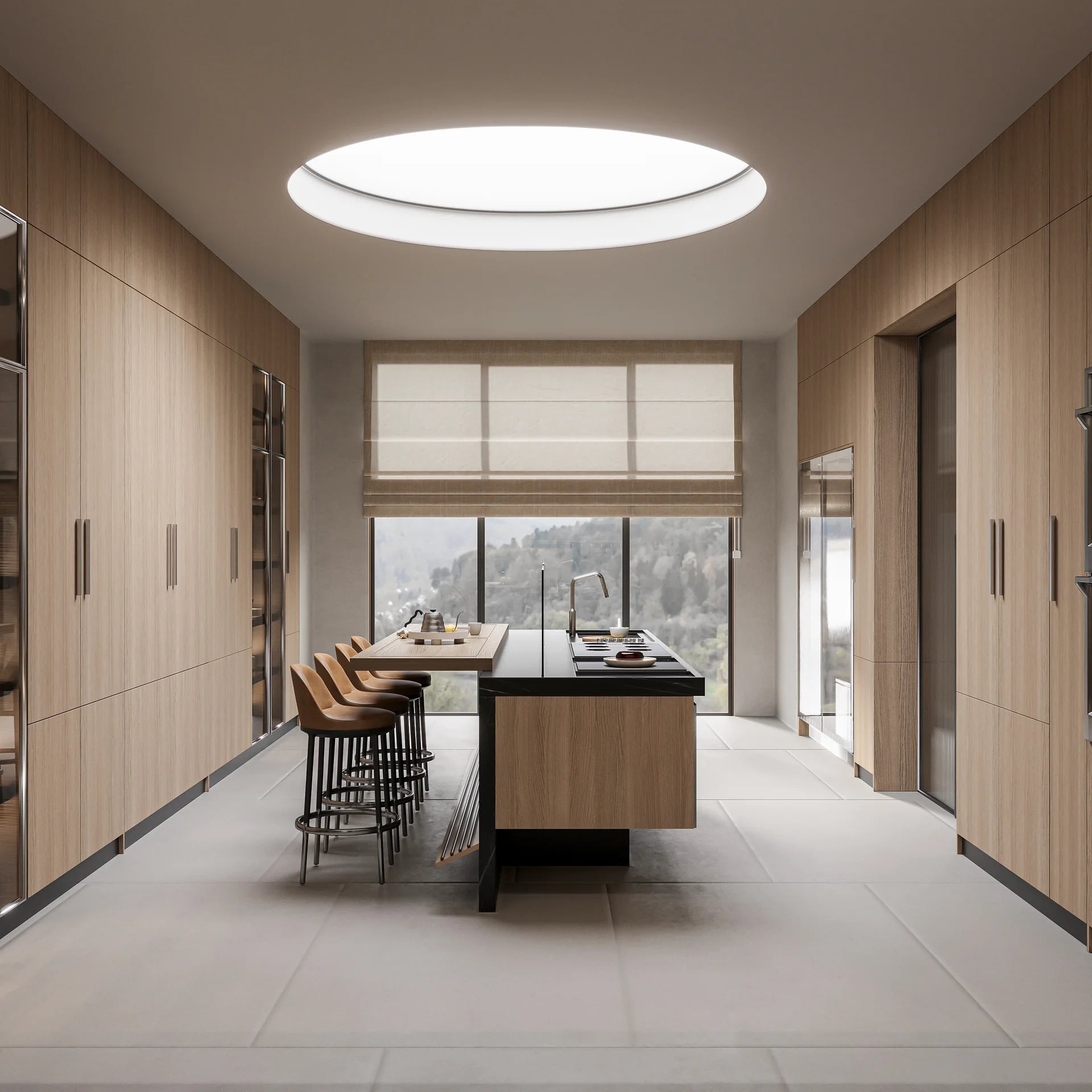
4. Raised Breakfast Bar
A slightly elevated surface above the main counter.
Why people love it:
Hides prep mess (very real, very useful)
Adds visual depth to the kitchen design
Choosing the Right Material for Your Breakfast Bar
Since your breakfast bar gets used a lot, material matters.
Popular breakfast bar countertop materials:
Quartz: Durable, low-maintenance, and great for daily use
Granite: Natural patterns, strong presence, timeless appeal
Marble: Beautiful, yes, but better for low-spill households
Solid surface or stainless steel: Ideal for modern, high-use kitchens
Pro tip: Match or subtly contrast your breakfast bar material with your main kitchen countertop to keep the design cohesive.
Seating, Lighting & Comfort: The Details That Matter
A breakfast bar might look great, but comfort is what makes people stay.
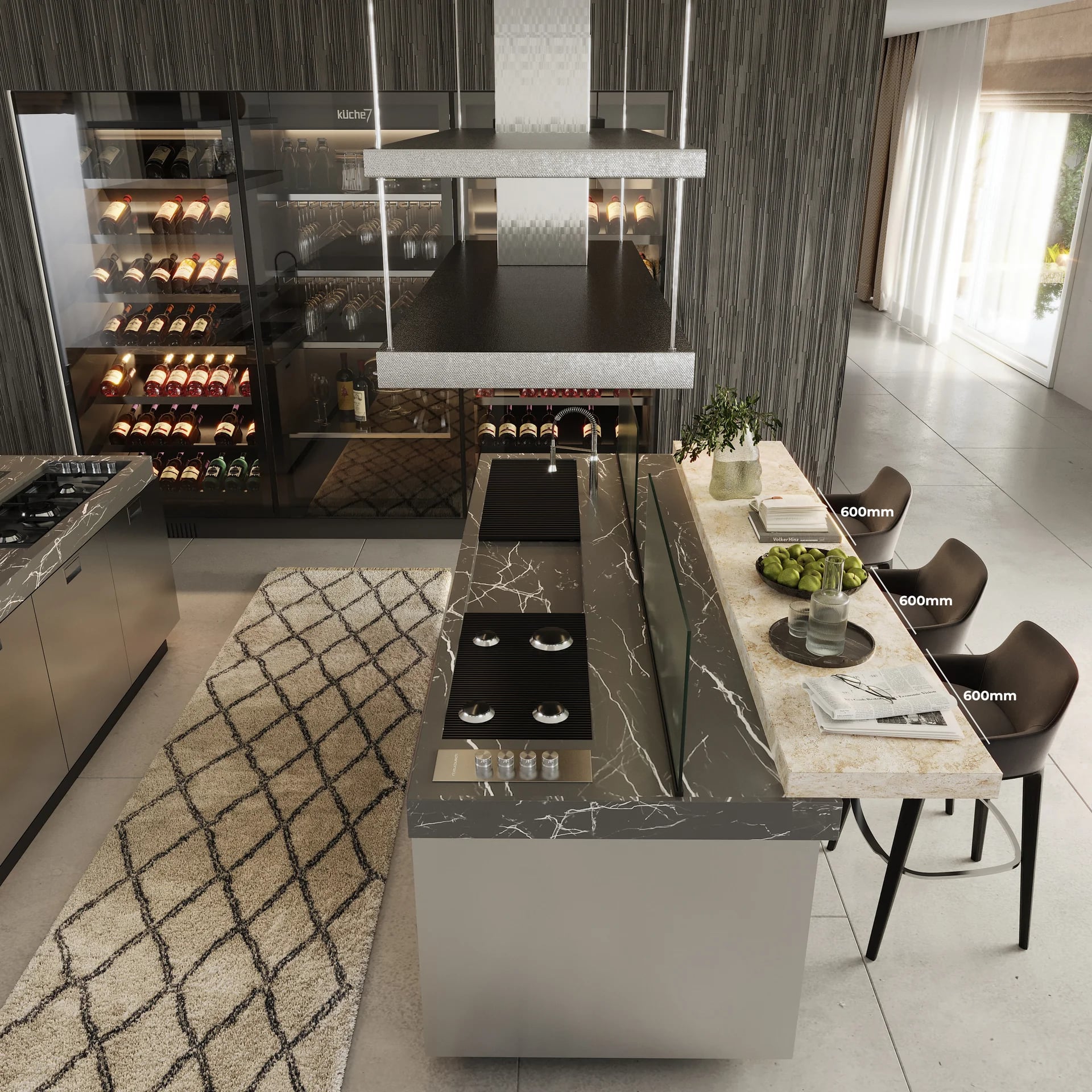
Seating tips:
Allow 600 mm per person for comfortable seating
Choose stools with backrests if the bar is used daily
Adjustable stools work best for families
Lighting tips:
Pendant lights add focus and warmth
Keep lighting soft; this isn’t an operating table
One light per seat usually works well
Common Breakfast Bar Design Mistakes (Avoid These!)
Not leaving enough legroom
Choosing stools that are too tall or too low
Treating it as an afterthought instead of a design feature
A breakfast bar should feel intentional, not like it was squeezed in at the last minute.
Is a Breakfast Bar Right for Your Kitchen?
Ask yourself:
Do I want a more casual dining option?
Do I like open, interactive kitchen spaces?
Could my kitchen use an extra surface that actually gets used?
If the answer is yes, even once, it’s worth considering.
Final Thoughts
Breakfast bars aren’t about trends. They’re about how we live today: fast mornings, flexible schedules, and kitchens that do more than cook.
And if a single counter can handle coffee, conversations, laptops, and late-night desserts… well, that’s good design doing its job.